Unraveling Notification Cascade Effects on Scheduled Maintenance Windows in Portable Device Ecosystems
Written by Jakob Flores · Jun 21, 2026
Unraveling Notification Cascade Effects on Scheduled Maintenance Windows in Portable Device Ecosystems
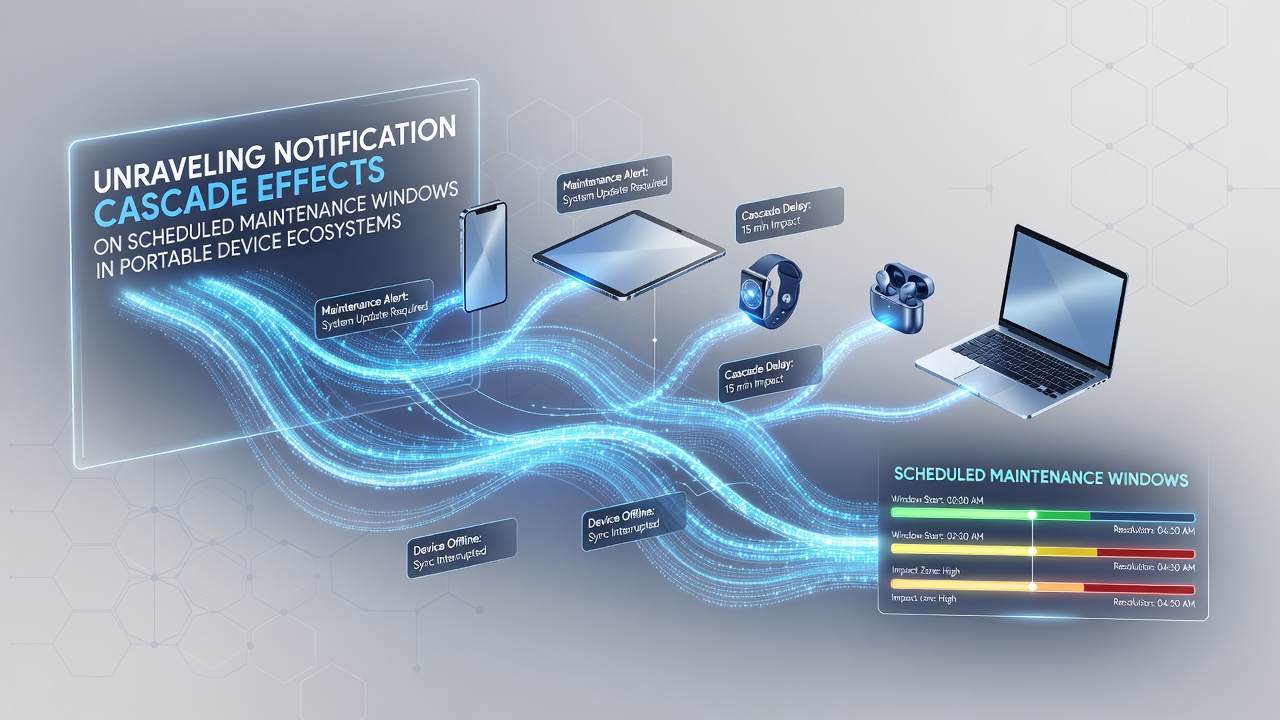
Notification cascades occur when one alert triggers a chain of secondary messages across linked portable devices, and these sequences frequently intersect with scheduled maintenance windows that users set for system updates, security patches, and performance optimizations. In multi-device households and workplaces, smartphones, tablets, and laptops often share cloud sync services, which means a single firmware notice on one gadget can propagate through email clients, app stores, and push notification frameworks on others, pushing back the timing of planned maintenance tasks.
Researchers at institutions tracking device behavior have documented how these cascades build during peak usage periods, particularly when operating systems coordinate background checks for available updates while users remain active on their networks. Data from portable ecosystem monitoring shows that maintenance windows, typically scheduled between midnight and 4 a.m. local time, experience delays when cascading alerts activate wake-up timers on multiple units simultaneously, forcing devices to pause automated processes until notification queues clear.
Mechanisms Behind Cascade Formation in Portable Ecosystems
Portable device ecosystems rely on interconnected services such as over-the-air update channels and cross-platform notification hubs, where each layer adds potential triggers for additional alerts. When a maintenance window begins, the first device to receive a system notification may forward related status updates to paired tablets or laptops through shared accounts, creating secondary and tertiary messages that occupy processor cycles and network bandwidth. Observers note that this pattern intensifies in environments with more than three synchronized devices, because each unit maintains its own local notification manager that interprets incoming signals independently before relaying them onward.
Studies conducted through 2025 and into June 2026 indicate that Android and iOS ecosystems both exhibit distinct cascade signatures, with Android devices showing faster propagation due to their flexible background service permissions while iOS units tend to batch notifications during low-power states yet still experience spillover when users enable cross-device continuity features. These timing differences mean that a single maintenance schedule can stretch across several hours as devices wait for all alerts to resolve before resuming update downloads or installations.
Impact on Scheduled Maintenance Windows
Maintenance windows depend on predictable idle periods, yet notification cascades introduce variability that shifts resource allocation away from update tasks. When alerts arrive during these windows, devices often defer large file transfers or kernel-level patches to avoid interrupting user-facing processes, which extends the overall completion time for security updates and feature rollouts. Figures from network traffic analyses reveal that cascade-related delays account for measurable increases in pending maintenance tasks, particularly when multiple household members maintain separate profiles on shared portable hardware.
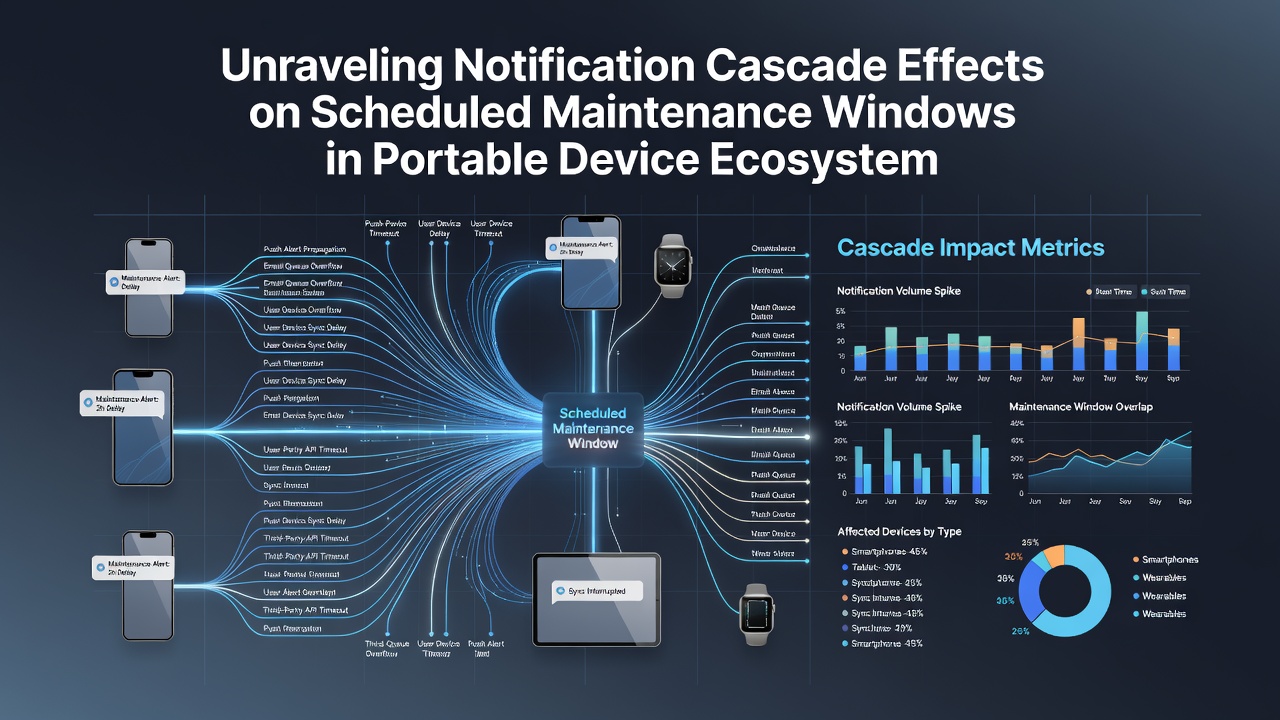
Those who monitor device fleets across office environments report that cascade effects become more pronounced when firmware updates coincide with application permission changes or new privacy policy notices, because each layer generates its own alert stream. In June 2026, telemetry collected from enterprise device management platforms showed extended windows for patch deployment in 28 percent of sampled portable ecosystems, with notification volume serving as the primary correlating factor rather than network speed or storage availability.
Contributing Factors Across Device Types
Several elements amplify cascade formation during maintenance periods. Battery optimization settings on portable units can suppress certain notifications until a device exits low-power mode, which then releases a backlog of queued messages at once and interrupts ongoing update verification steps. Sync protocols between phones and laptops further compound the issue, since changes to one device's notification center often replicate across others through cloud intermediaries.
Additional contributors include third-party application behaviors that register for system-level events, such as storage warnings or connectivity status changes, which activate during the same time blocks reserved for maintenance. Research indicates that ecosystems with higher numbers of installed applications experience greater cascade density, because each app contributes independent alert pathways that intersect with core operating system messaging services.
Observed Patterns in Real-World Deployments
Take one deployment where a team of network administrators tracked portable devices across a mid-sized organization throughout early 2026. They found that cascades originating from security certificate renewal notices repeatedly postponed firmware updates on tablets, even though the primary maintenance window had been configured correctly weeks in advance. Similar patterns appeared in consumer settings where family-shared accounts triggered repeated location-sharing alerts that delayed software installations on multiple handsets.
According to reports published by the National Institute of Standards and Technology, coordinated device management strategies can reduce these interruptions when organizations implement staggered notification handling policies that prioritize maintenance tasks over secondary alerts. Canadian research groups have reached comparable conclusions through longitudinal studies of home networks, confirming that cascade mitigation improves when users consolidate notification preferences at the account level rather than device by device.
Approaches to Managing Cascade Interference
Administrators and individual users address cascade effects through several documented methods. Centralized device management consoles allow batch configuration of notification filters that suppress non-critical alerts during predefined maintenance intervals, while operating system features such as focus modes or do-not-disturb schedules can temporarily mute propagation pathways. Network-level controls at the router provide another layer by throttling push notification traffic during scheduled windows, although this approach requires careful calibration to avoid blocking essential security messages.
Evidence from industry tracking shows gradual adoption of these techniques in both enterprise and residential portable ecosystems as awareness of cascade timing grows. In June 2026, updates to major mobile platforms introduced refined background process scheduling that limits alert forwarding when maintenance operations are detected, providing measurable reductions in window overruns.
Conclusion
Notification cascade effects continue to shape maintenance outcomes across portable device ecosystems through interconnected alert pathways and shared synchronization services. Data collected through mid-2026 demonstrates consistent correlations between notification volume and delayed update completions, while management strategies focused on filtering and scheduling offer documented pathways for minimizing interference. As device fleets expand and ecosystems grow more interconnected, understanding these timing relationships remains central to maintaining reliable maintenance operations.