Tracing Permission Request Patterns That Contribute to Storage Bloat in Cross-Platform Sync Setups
Written by Willa Müller · May 29, 2026
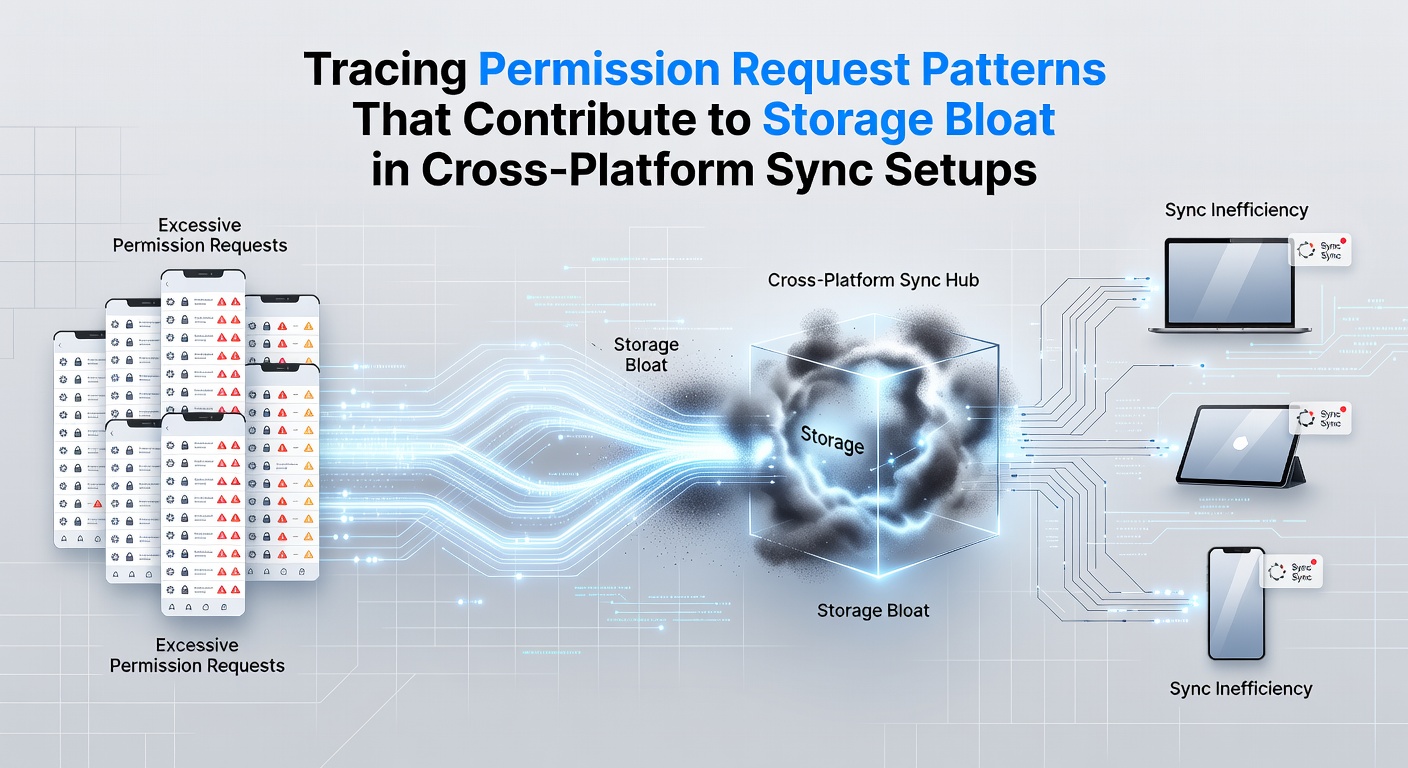
Tracing Permission Request Patterns That Contribute to Storage Bloat in Cross-Platform Sync Setups
Permission request patterns in cross-platform sync setups often create conditions where storage bloat emerges through repeated file scanning and duplicate generation. Applications on Windows, macOS, Android, and iOS request access to local directories during initial setup and subsequent updates, yet differences in how each operating system enforces these permissions lead to overlapping operations that accumulate temporary and cached files over time.
Research indicates that sync clients frequently ask for broad read-write access rather than scoped folder permissions, which results in full-volume scans even when only specific files require synchronization. Data shows these broad requests trigger background processes that run concurrently across devices, and each process may write metadata or conflict-resolution copies without immediate cleanup.
Permission Mechanics Across Operating Systems
Each platform implements storage access controls differently, and these variations produce distinct request sequences. Android versions after 11 require scoped storage declarations that limit app visibility to designated directories, while Windows continues to grant legacy full-path permissions through user account control prompts. Observers note that when a user grants access on one device, the sync service may interpret the same request as authorization to replicate metadata structures on connected platforms, which creates redundant index files.
macOS uses entitlement-based sandboxing that prompts users at each major version update, whereas iOS ties permissions to app-specific containers that do not always align with desktop folder structures. Those who've studied these interactions report that mismatched container mappings cause the sync engine to treat the same logical file as two separate objects, prompting the creation of versioned duplicates during reconciliation.
Recurring Request Patterns That Drive Bloat
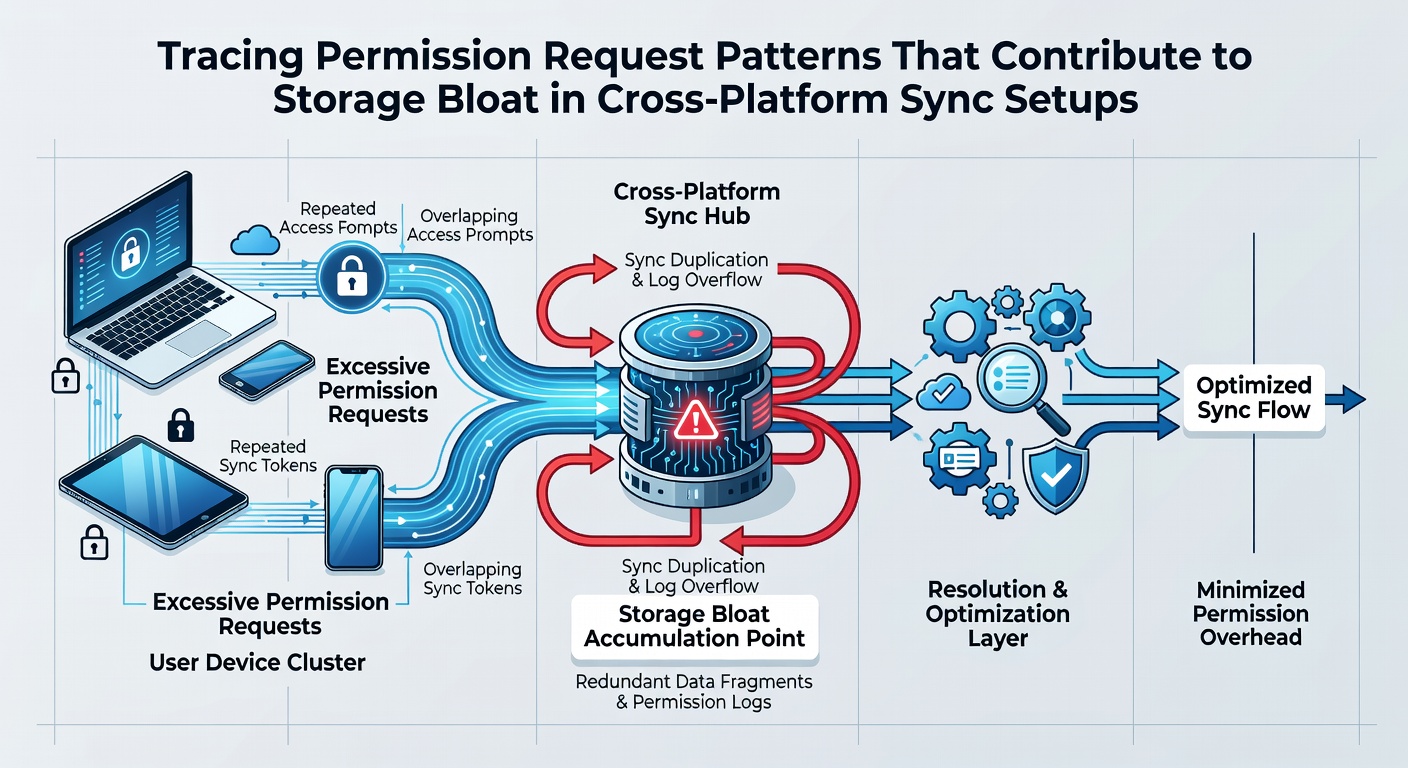
One pattern involves repeated permission renewal prompts triggered by background sync after operating system updates. When an app loses temporary access following a security patch, it re-requests permissions and rescans the entire storage hierarchy, writing new cache entries each time. Another pattern surfaces when users connect additional devices mid-session, because each new client inherits cumulative permission states from the account rather than starting with minimal access.
Studies found that conflict-resolution modules often request write access to parent directories even when only child files are modified, which leads to the generation of sidecar files for every detected change. These sidecars accumulate across platforms because cleanup routines run only after successful sync confirmation, and network interruptions frequently prevent that confirmation step from completing.
Impact on Long-Term Storage Usage
Figures reveal measurable growth in orphaned metadata and temporary objects when permission requests occur at high frequency. In May 2026, monitoring tools deployed by enterprise IT teams recorded average increases of 12 to 18 percent in local storage consumption attributable to sync-related artifacts on mixed-device households. The growth rate accelerates when multiple sync services operate simultaneously, because each service maintains its own permission cache without coordination.
What's interesting is how permission revocation behaves differently than initial grants. Once a user denies or limits access on one platform, residual entries on other devices continue to reference the old state, which forces the sync engine to recreate missing objects during the next connection cycle. This cycle repeats until manual intervention clears the stale references.
Tracing and Mitigation Approaches
System administrators trace these patterns by logging permission events alongside storage allocation changes. Tools that correlate timestamped permission prompts with file-system journal entries make it possible to identify which request sequences precede bloat events. According to findings published by the Storage Networking Industry Association, organizations that implemented permission-scoping policies reduced duplicate file counts by up to 40 percent within six months.
Another effective step involves configuring sync clients to request minimal permissions at install time and then layering additional access only when users explicitly select folders. Research from Canadian academic groups at the University of Waterloo demonstrates that such incremental permission models decrease background scan frequency while maintaining synchronization accuracy across heterogeneous networks.
Conclusion
Permission request patterns in cross-platform sync environments contribute directly to storage bloat through repeated scanning, duplicate generation, and uncoordinated cache accumulation. The differences in operating-system enforcement mechanisms amplify these effects when services operate without centralized coordination. Tracking permission events alongside storage metrics provides visibility into the sequences that produce excess data, and scoped-permission configurations offer a practical method to limit unnecessary object creation. As device ecosystems continue to diversify, attention to these request patterns remains essential for maintaining efficient storage utilization.