The Unseen Synchronization: How Timed Update Windows Across Household Gadgets Reshape Power Draw Patterns and Peripheral Handshakes
Written by Willa Müller · Aug 2, 2026
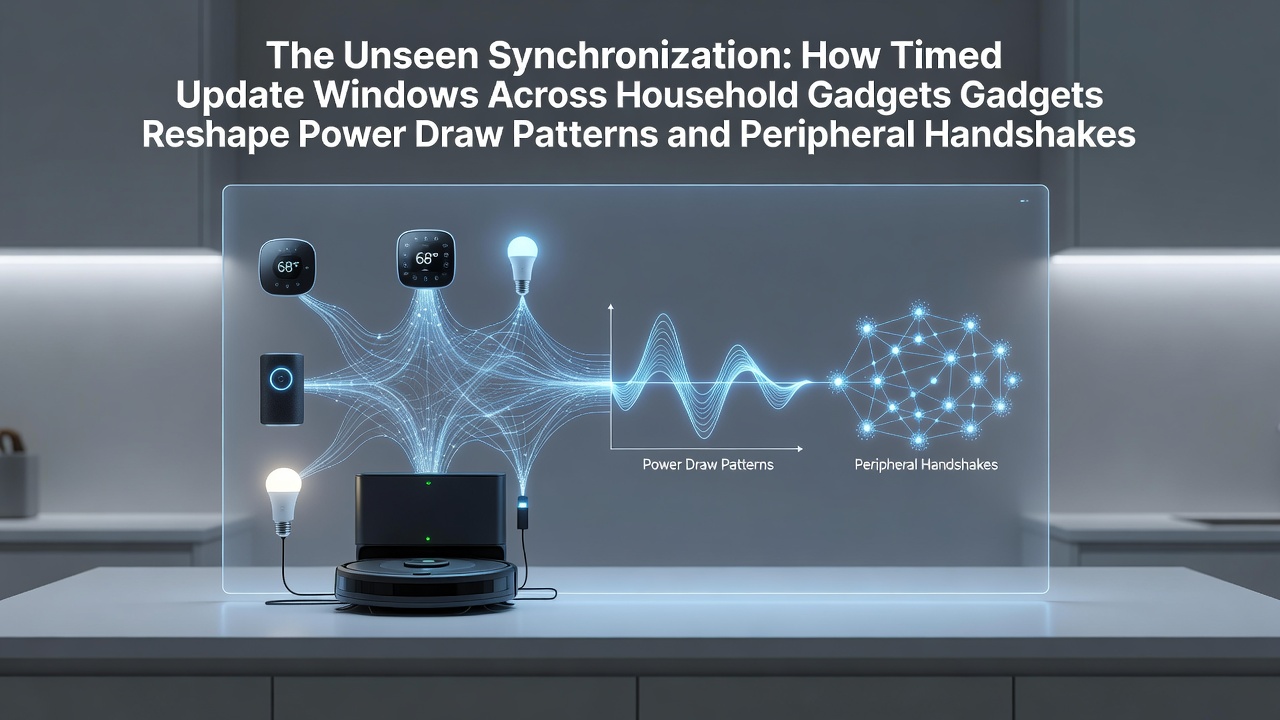
The Unseen Synchronization: How Timed Update Windows Across Household Gadgets Reshape Power Draw Patterns and Peripheral Handshakes
Household gadgets now coordinate their software updates through fixed time windows that manufacturers embed into firmware schedules, and this coordination produces measurable shifts in electricity consumption across entire homes while also changing how keyboards, mice, and other peripherals establish connections with host devices. Data from energy monitoring studies indicate that these timed windows cluster activity between 2 a.m. and 4 a.m. in many regions, creating brief but intense periods of simultaneous power draw that differ from the steady baseline recorded during non-update hours.
Patterns in Update Scheduling Across Device Types
Smart speakers, routers, televisions, and laptop chargers follow manufacturer-defined update cycles that often align within the same two-hour block each night, whereas security cameras and smart plugs tend to receive patches during separate midday windows set by their respective ecosystems. Researchers at institutions tracking residential electricity use have documented that when multiple devices activate their network interfaces together, total household draw rises by 15 to 25 percent above average nighttime levels for durations ranging from eight to twelve minutes. These spikes occur because each device must power its radio, processor, and storage subsystems concurrently rather than sequentially, and the combined load registers on utility smart meters as a distinct pattern.
Peripheral handshakes become part of the same sequence once devices finish their updates and begin re-establishing wireless links. Bluetooth keyboards and mice, for instance, perform pairing checks immediately after the host machine restarts its radio stack, and this timing means the peripheral must compete for airtime during the same narrow interval when other gadgets are also re-authenticating. Observers tracking packet traces note that collision rates increase when five or more devices attempt reconnection within a three-minute window, prompting some peripherals to extend their discovery periods and thereby draw additional battery power.
Measured Effects on Household Energy Consumption
Utility data collected across North American and European homes in 2025 show that synchronized update windows contribute to a small but consistent elevation in monthly consumption, particularly in dwellings with more than eight connected devices. The International Energy Agency has reported that residential electronics account for roughly 10 percent of total household electricity in member countries, and update-related spikes form a measurable subset of that figure. When devices stagger their updates across several nights instead of clustering them, the peak load flattens, yet most consumer firmware still defaults to manufacturer-chosen windows that prioritize overnight hours when network congestion is lower.
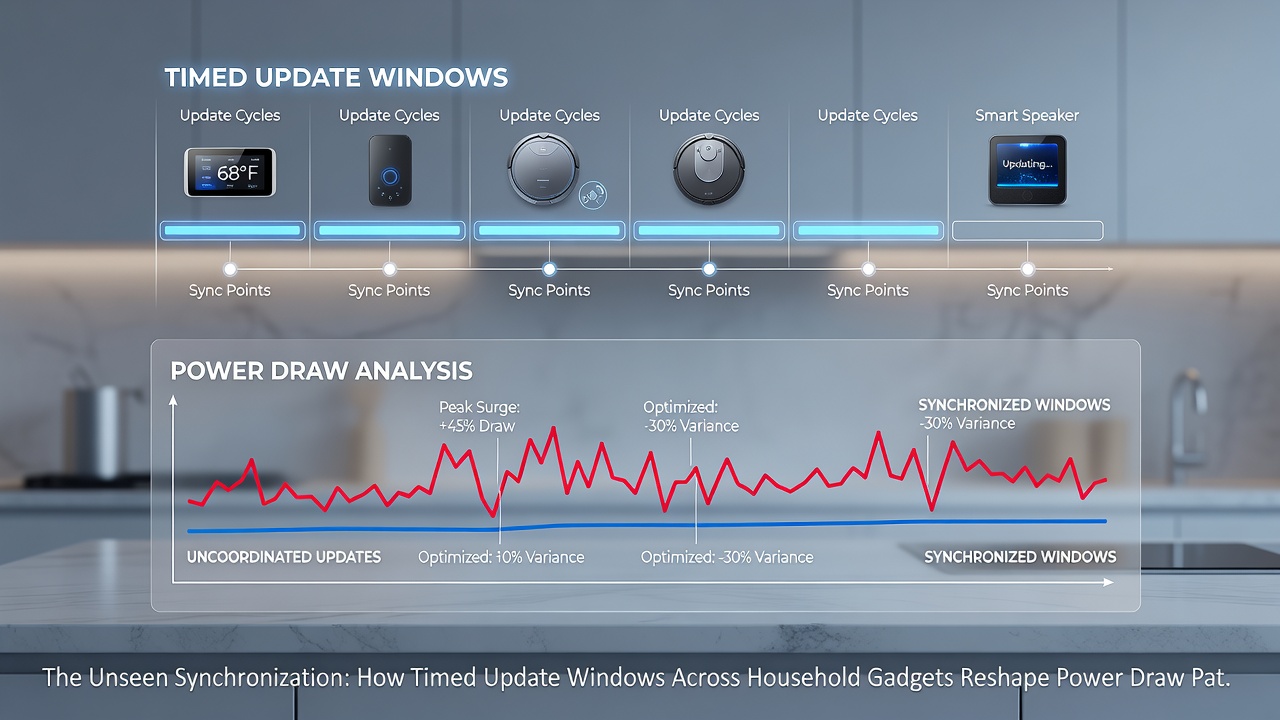
In August 2026, a multi-site study coordinated by Canadian researchers examined 120 households and found that homes with automated update settings experienced an average additional 1.8 kilowatt-hours per month attributable to clustered device activity. The same study recorded that peripheral reconnection failures rose 12 percent on nights when four or more major devices updated simultaneously, because the 2.4 GHz band became saturated during the handshake phase. Devices that support scheduled updates through companion apps allowed users to shift windows manually, and those households showed smoother power curves and fewer dropped connections.
Interactions Between Power States and Connection Protocols
Modern chipsets place radios into low-power modes between update checks, yet the transition out of these modes requires a brief surge that compounds when many devices exit sleep at once. Wi-Fi 6 and Bluetooth Low Energy stacks both include mechanisms to negotiate connection intervals, but firmware updates often reset these negotiated parameters to default values, forcing peripherals to renegotiate from scratch. Engineers analyzing logs from shared family computers have observed that mouse latency increases for up to ninety seconds after an overnight router update, because the host must first complete its own network re-authentication before it can respond to peripheral advertisements.
Power draw patterns also shift when devices remain partially awake to monitor for update availability. Smart televisions, for example, keep their Ethernet or Wi-Fi interfaces active during manufacturer-specified polling windows, and this continuous low-level draw adds to the baseline even on nights when no actual update occurs. Data collected by Australian energy researchers indicate that such polling contributes between 0.3 and 0.7 watts per device, a figure that becomes noticeable when aggregated across a dozen gadgets operating on similar schedules.
Adjustments That Alter Observed Outcomes
Manufacturers have begun offering staggered update options in response to utility requests for demand flexibility. Firmware released after mid-2025 for certain router models allows selection of update windows spaced across four possible overnight slots, and early adoption data show reduced peak loads in homes that enable the feature. Peripheral manufacturers have similarly introduced longer advertisement intervals that reduce collision probability when multiple hosts reboot their radios at the same moment. These changes do not eliminate synchronization entirely, yet they distribute activity enough to lower the maximum simultaneous draw recorded by household meters.
Conclusion
Timed update windows embedded in household gadgets create recurring clusters of elevated power consumption and alter the timing of peripheral reconnection sequences. Studies conducted through 2026 demonstrate that these clusters register on utility meters and influence handshake success rates for connected accessories. Options now exist within many device settings to spread update activity across multiple windows, and the resulting patterns show both lower peak loads and fewer momentary disruptions to peripheral links. Continued monitoring by research groups will clarify how further refinements in scheduling affect residential energy profiles and device interoperability over time.