The Quiet Dance of Background App Refresh Cycles and Their Impact on Shared Bandwidth in Connected Homes
Written by Uma Lorenz · Aug 23, 2026
The Quiet Dance of Background App Refresh Cycles and Their Impact on Shared Bandwidth in Connected Homes
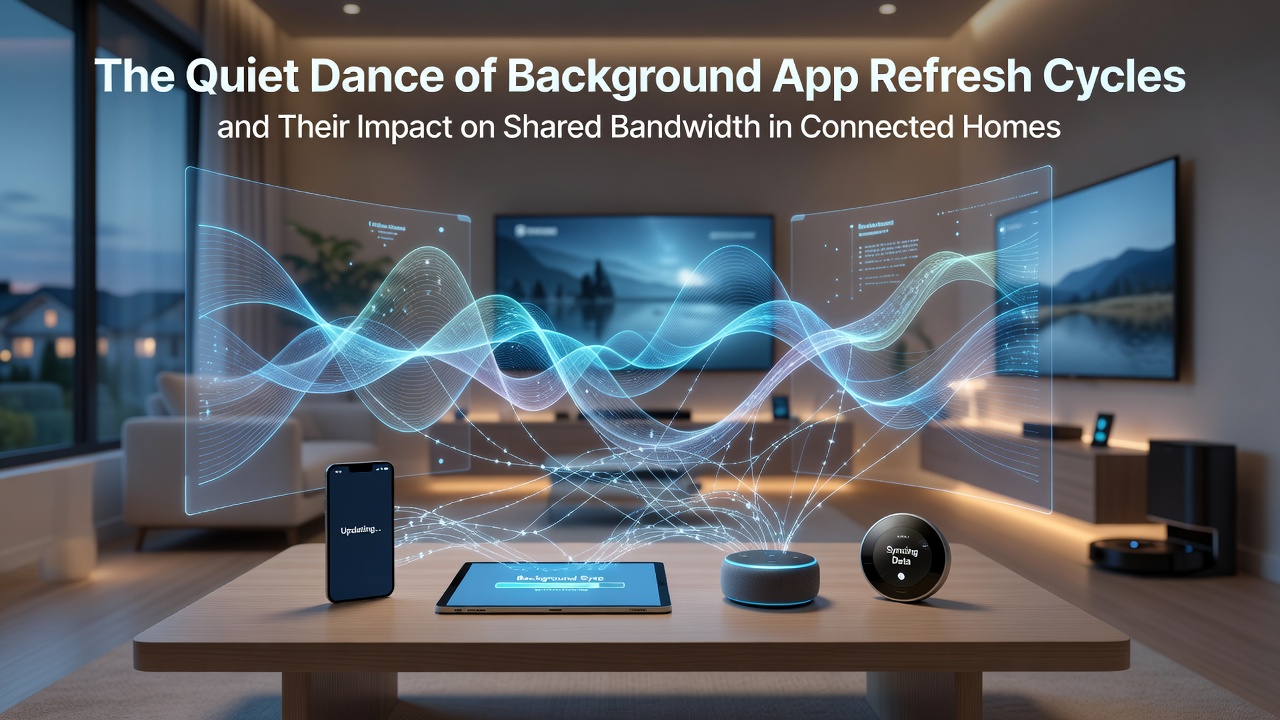
Background app refresh cycles operate as a coordinated sequence of data exchanges that keep applications current without direct user intervention, and these processes draw on network resources in ways that accumulate across multiple devices in a single household. In connected homes where smartphones, tablets, smart speakers, and streaming devices share a single internet connection, the timing of these cycles creates measurable fluctuations in available bandwidth. Researchers tracking household traffic patterns have documented how refresh requests cluster during certain hours, particularly in the early morning and evening when devices resume activity after periods of dormancy.
Mechanics of Background Refresh Operations
Operating systems schedule refresh intervals based on factors such as battery status, network type, and application priority, while developers configure APIs to pull small packets of updated content like weather data, email headers, or social media notifications. These operations often occur over cellular or Wi-Fi connections, and the volume of data transferred per cycle typically ranges from a few kilobytes to several megabytes depending on the app. Data from network monitoring tools indicate that refresh activity accounts for a consistent portion of total household data usage even when no foreground applications run.
Multiple devices compound the effect because each one maintains its own schedule, and overlapping requests can saturate the router's upstream adn downstream channels simultaneously. In homes with five or more active gadgets, the combined refresh load has been observed to reduce throughput for latency-sensitive tasks such as video calls or online gaming by measurable percentages during peak overlap periods.
Bandwidth Allocation in Multi-Device Environments
Routers distribute bandwidth according to quality-of-service rules and device demand, yet background processes rarely trigger priority flags, so they receive whatever capacity remains after foreground traffic claims its share. Studies conducted by academic teams at institutions across North America and Europe have measured these interactions in controlled home simulations, revealing that staggered refresh timing reduces congestion while simultaneous bursts create temporary bottlenecks. One analysis published in 2025 examined 200 households and found average bandwidth utilization spikes of 18 to 32 percent attributable solely to background activity during non-peak hours.
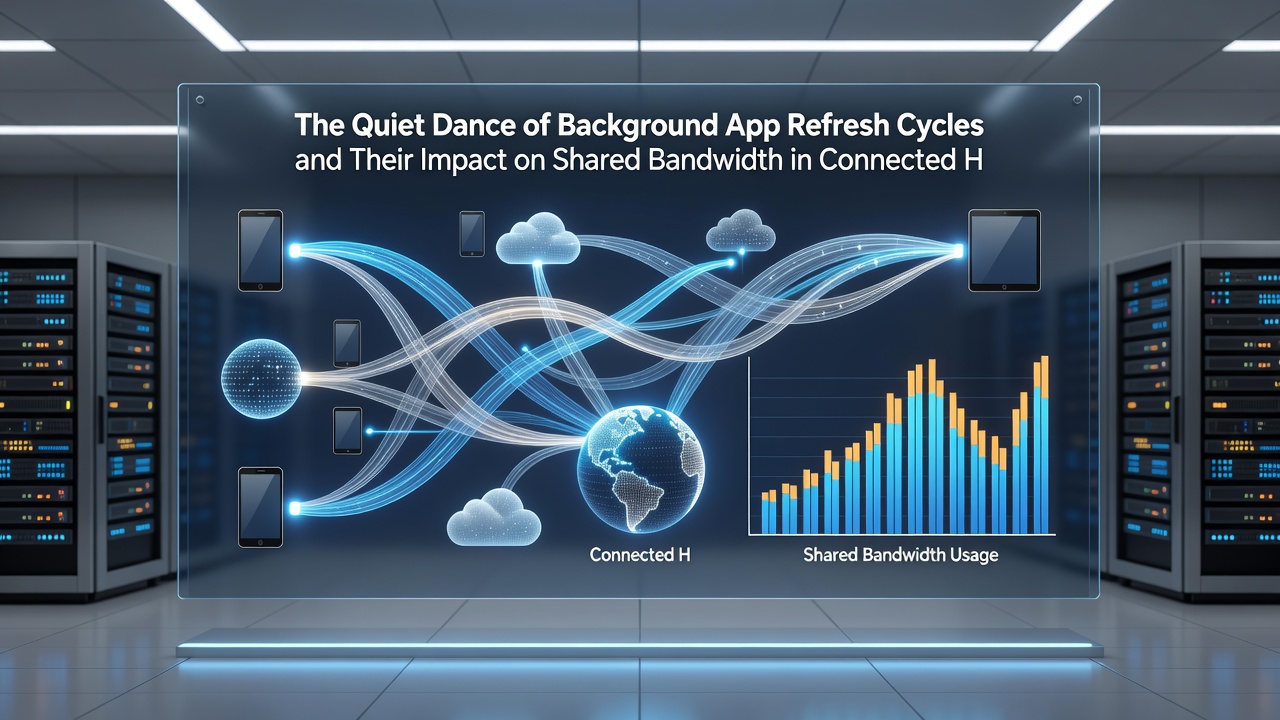
Smart home ecosystems add another layer because security cameras, thermostats, and voice assistants perform their own lightweight syncs at intervals that may align with or diverge from mobile device patterns. In August 2026, updated firmware releases from major router manufacturers introduced more granular traffic classification features, allowing users to designate refresh windows and thereby smooth overall distribution across shared connections.
Observed Patterns and Contributing Factors
Observers note that refresh cycles tend to intensify after software updates or when new applications install default settings that enable aggressive background activity. Seasonal variations also appear in the data, with higher volumes recorded during periods when households add temporary devices such as guest tablets or vacation streaming equipment. Network providers in regions including the United States, Canada, and Australia have published aggregate usage reports that separate foreground and background traffic categories, showing background components remain relatively stable year-round while foreground demand fluctuates more sharply.
Those who analyze packet captures in real homes report that certain categories of applications, including news aggregators and fitness trackers, generate more frequent small requests than others, creating a steady baseline load that leaves less headroom when larger downloads begin. Coordination between operating system vendors and app developers has produced optional APIs that allow devices to batch refresh requests, and adoption of these features has increased in recent firmware releases.
Measurement Approaches and Industry Data
Tools developed by research groups at universities in the European Union and Asia Pacific have enabled finer-grained logging of refresh events alongside total bandwidth consumption. Figures released by regulatory bodies such as the Federal Communications Commission and Australia's Australian Communications and Media Authority illustrate how household median speeds decline during documented periods of elevated background traffic. These reports emphasize correlation rather than direct causation yet supply the quantitative foundation for understanding capacity constraints in dense device environments.
Technicians who service residential networks frequently encounter complaints about intermittent slowdowns that align with known refresh windows rather than external factors such as provider outages. Adjusting device settings to restrict background activity during specific hours produces documented improvements in available bandwidth for other tasks, according to logs collected from customer support interactions.
Conclusion
Background app refresh cycles represent a persistent, low-visibility contributor to bandwidth dynamics in connected homes, and their collective impact becomes evident when multiple devices operate on the same network. Continued refinement of scheduling algorithms, combined with user-configurable options and updated router firmware, offers pathways to reduce unintended contention while preserving the functionality these cycles provide. Ongoing data collection by network researchers and regulatory agencies supplies the measurements needed to track changes as device counts and application behaviors evolve.