Signal Overlap Dynamics Affecting Synchronization Timelines in Stacked Apartment Environments
Written by Uma Lorenz · Aug 21, 2026
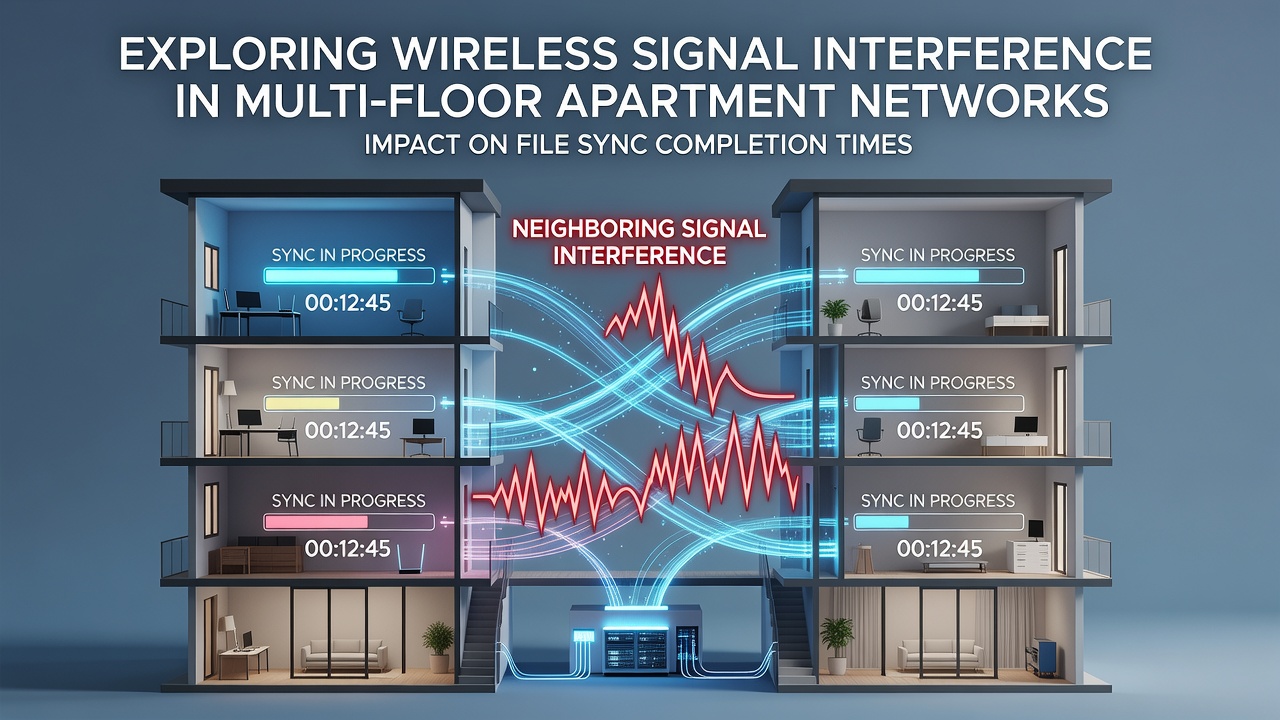
Signal Overlap Dynamics Affecting Synchronization Timelines in Stacked Apartment Environments
Researchers tracking wireless environments in multi-floor residential buildings have documented measurable shifts in file synchronization durations when neighboring networks operate on overlapping channels. Data from monitoring setups installed in urban apartment complexes shows that signal contention often extends completion times for cloud-based file transfers by measurable percentages, particularly during peak evening hours when multiple households run concurrent backup routines.
Studies conducted through 2025 and into August 2026 reveal patterns where 2.4 GHz and 5 GHz bands experience increased packet retransmissions as signals from adjacent units overlap. Those who've analyzed router logs note that devices attempting to sync large media libraries encounter delays when channel utilization exceeds certain thresholds, forcing protocols to retry transmissions repeatedly.
Channel Allocation Patterns Across Vertical Structures
Network administrators and building-wide surveys indicate that apartments stacked directly above one another frequently share similar default channel settings from consumer routers. This configuration leads to co-channel interference that fragments available bandwidth, and observers note slower handshake processes during initial sync negotiations. Equipment deployed in test environments across three-story and five-story buildings captured logs showing that file sync operations lasting under ten minutes in isolated conditions stretched beyond twenty minutes once neighboring signals reached comparable power levels.
Equipment manufacturers have released firmware updates that incorporate better band steering, yet adoption rates vary by household. Figures from industry reports show that buildings with mixed router models experience more pronounced timing variations compared to uniform deployments.
Measurement Approaches Used in Field Studies
Teams collecting data in real-world settings placed sensors on each floor to record signal strength, noise floors, and throughput during scheduled sync events. These setups captured metrics that correlated higher interference readings with extended file transfer windows, especially when multiple devices per unit initiated simultaneous uploads. One study revealed that 802.11ac and 802.11ax clients responded differently, with newer standards demonstrating partial mitigation through improved spatial reuse features.
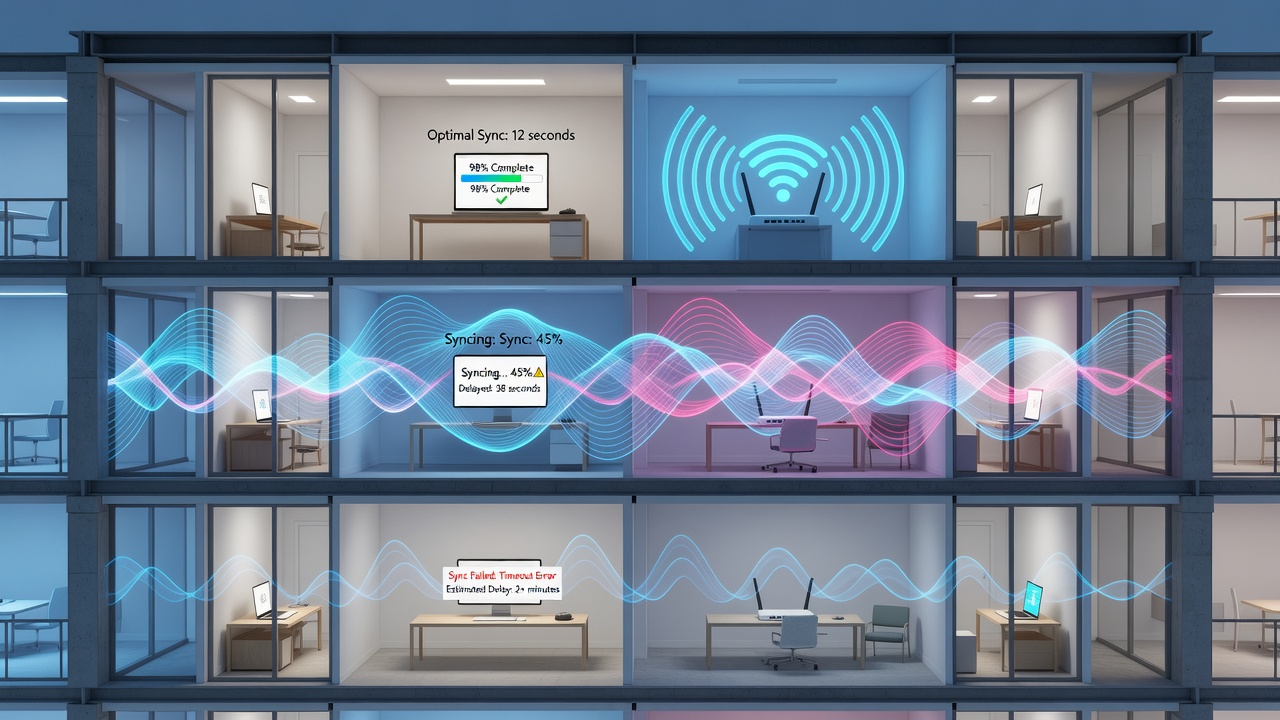
Analysts cross-referenced these readings against public spectrum usage databases maintained by regulatory bodies. According to information from the Federal Communications Commission, channel occupancy statistics in dense urban zones have risen steadily, creating conditions that affect latency-sensitive tasks such as background synchronization. Similar observations appear in reports issued by the Australian Communications and Media Authority, which documented comparable interference profiles in multi-unit dwellings.
Factors That Compound Timing Variations
Physical building materials, including concrete floors and metal framing, attenuate signals unevenly and create pockets where interference spikes unpredictably. Residents running mesh systems sometimes introduce additional nodes that extend coverage but also increase the number of overlapping transmissions. Data indicates that sync completion times lengthen further when video streaming and online gaming occur on the same local networks, since these activities compete for airtime using different quality-of-service priorities.
Software configurations on client devices also play a role. Applications that segment large files into smaller chunks generate more frequent acknowledgment packets, each of which becomes vulnerable to collision when neighboring networks transmit simultaneously. Researchers tracking these sequences found that adjusting chunk sizes or scheduling syncs during off-peak periods reduced average completion durations in controlled tests.
Conclusion
Evidence gathered across multiple apartment complexes demonstrates that neighboring wireless signals exert measurable influence on file synchronization timelines in vertically arranged living spaces. Continued monitoring through August 2026 and beyond will likely refine understanding of these interactions as newer wireless standards and denser deployments become commonplace.