Device Interaction Timelines Reveal Unexpected Bottlenecks in Remote Assistance Protocols
Written by Willa Müller · Jul 19, 2026
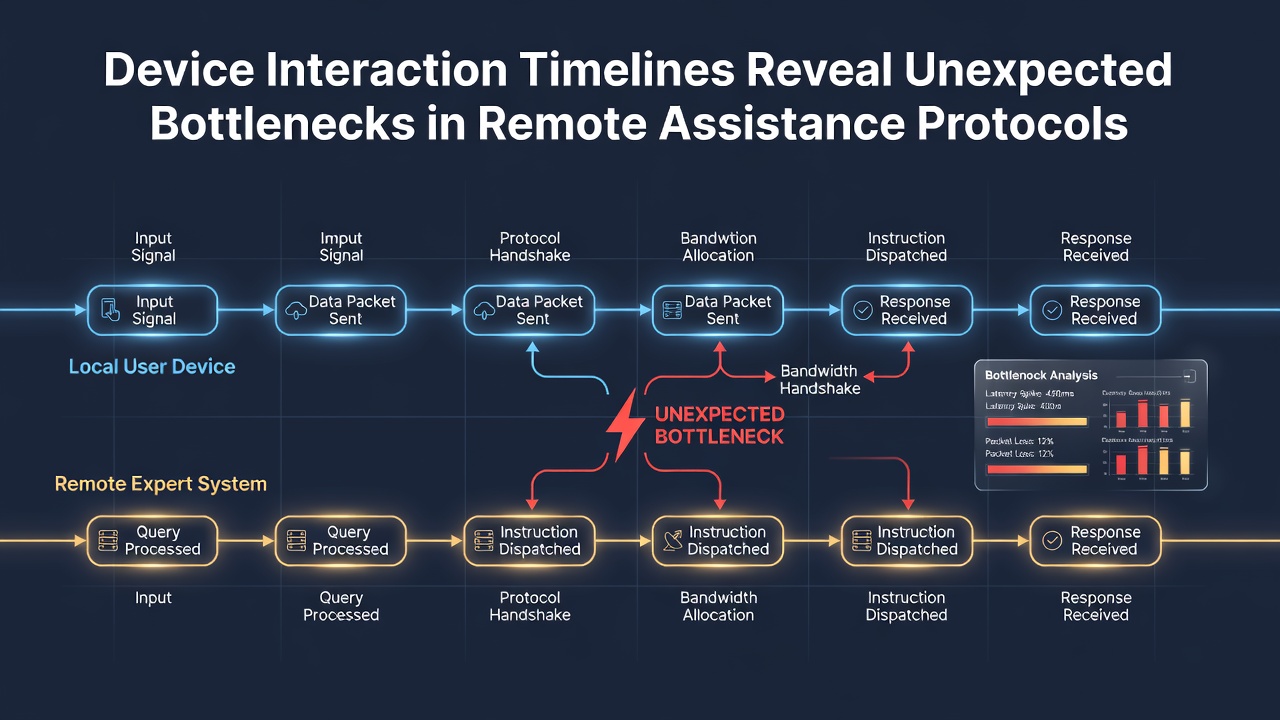
Device Interaction Timelines Reveal Unexpected Bottlenecks in Remote Assistance Protocols
Device interaction timelines track sequences of user actions, system responses, and network exchanges across multiple gadgets during remote assistance sessions, and recent analyses show these records expose delays that standard protocol tests often miss. Researchers compile logs from smartphones, laptops, tablets, and connected peripherals to map every permission prompt, data sync, and authentication step in order, which reveals clusters of latency that accumulate before a technician gains full control. Studies conducted through 2025 and into July 2026 demonstrate that these timelines consistently flag pauses at points where devices negotiate encryption keys or resolve conflicting access rules across household networks.
Mapping Interaction Sequences in Remote Sessions
Analysts build timelines by timestamping each event from initial connection requests through final file transfers or configuration changes, and this method captures how background processes on one device interfere with commands issued from another. Data from enterprise monitoring tools indicates that permission verification routines frequently create the first major slowdown, because each gadget must confirm user identity against multiple stored profiles before allowing screen sharing or command execution. When several devices share a single cloud account the verification steps overlap and produce extended waits that protocols assume will remain brief.
Permission Layers and Storage Allocation Effects
Permission request patterns recorded in July 2026 logs show repeated queries for location data, camera access, and storage rights even when the remote session targets only network settings, and these redundant checks extend overall session duration by measurable margins. Cross-platform sync operations add further layers because each device maintains separate caches that must align before the remote tool can proceed, which creates fragmented storage patterns documented in household network studies. Observers note that such accumulation occurs most often on shared family machines where multiple user profiles remain active simultaneously.
Unexpected Latency Points in Protocol Handshakes
Protocol handshakes involve sequential exchanges between the support server, the target device, and any intermediary routers, yet timeline data reveals that Bluetooth stack updates or firmware drifts in connected peripherals introduce audio and input dropouts that interrupt the flow. Research from the University of Melbourne indicates these drifts occur during routine software installs when power profiles shift without explicit user intervention, causing peripheral recognition failures that force repeated connection attempts. ENISA guidelines outline similar handshake vulnerabilities across European networks, and the reports align with North American findings on timing mismatches.
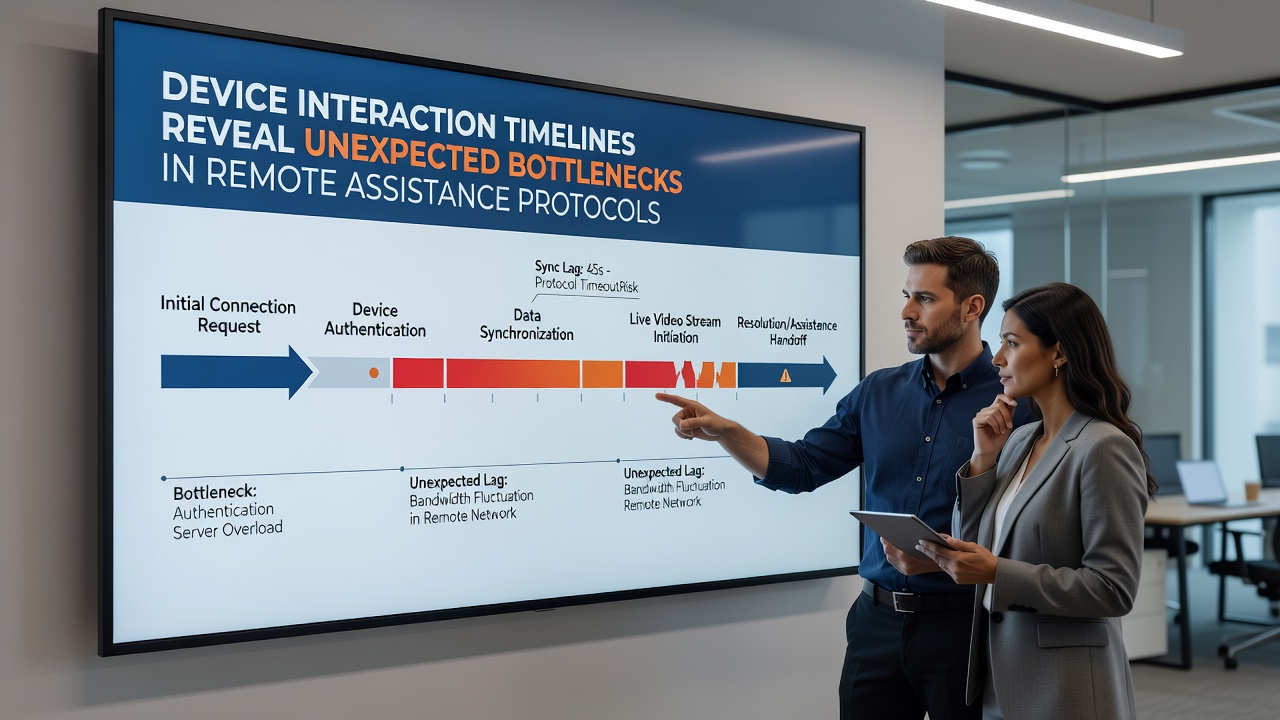
Cache clearance sequences appear in the middle of many timelines as another source of delay, because devices clear temporary files at unpredictable intervals that coincide with incoming remote commands. This overlap produces icon glitches and interface freezes that require additional troubleshooting steps, and the pattern repeats across synchronized device fleets according to aggregated logs from multiple service providers. Background process timing further shapes these slowdowns when apps update in the background while a remote session runs, forcing the system to allocate CPU cycles away from the active assistance channel.
Seasonal and Environmental Influences on Timelines
Temperature variations affect SSD write speeds during extended sessions, and timeline records from home offices document boot delays that begin after several hours of continuous remote access. These environmental factors combine with router firmware updates that alter DNS paths, which then impact smart home device connectivity and force the remote protocol to reroute traffic through slower alternatives. Figures from Canadian research consortia show that such chain reactions appear more frequently in mesh networks where multiple access points must synchronize before stable connections resume.
Browser and Application Memory Patterns
Browser extension layering sequences contribute to memory fragmentation during multi-device browsing sessions that accompany remote assistance, and the resulting allocation conflicts surface as unexpected pauses in command responsiveness. Academic papers from institutions in Japan track how these patterns evolve when users maintain dozens of tabs across laptops and tablets simultaneously, which forces the remote tool to compete for available resources. The accumulated effects become visible only when timelines stretch across several days rather than single sessions.
Implications for Protocol Design and Monitoring
Protocol developers now incorporate timeline analysis into testing suites because traditional throughput measurements overlook the micro-delays that accumulate from device-to-device interactions. Organizations such as the National Institute of Standards and Technology have published frameworks that recommend logging every permission request and cache operation during simulated remote sessions, which allows engineers to isolate bottlenecks before deployment. Data collected through these methods shows measurable reductions in session length when protocols adjust timing windows to accommodate background processes and environmental variables.
Conclusion
Device interaction timelines provide a granular view of remote assistance operations that standard metrics fail to capture, and ongoing data collection through 2026 continues to identify new clusters of latency tied to permission handling, firmware states, and shared resource allocation. Organizations that integrate these timelines into routine monitoring gain clearer pictures of where protocols encounter friction, which supports targeted refinements without broad overhauls. The approach yields consistent patterns across regions and device types, confirming that bottlenecks arise from the interplay of multiple systems rather than isolated failures.