Decoding Overlapping Update Timelines Across Gadgets That Fragment Household Connectivity Patterns
Written by Devon Carter · Aug 23, 2026
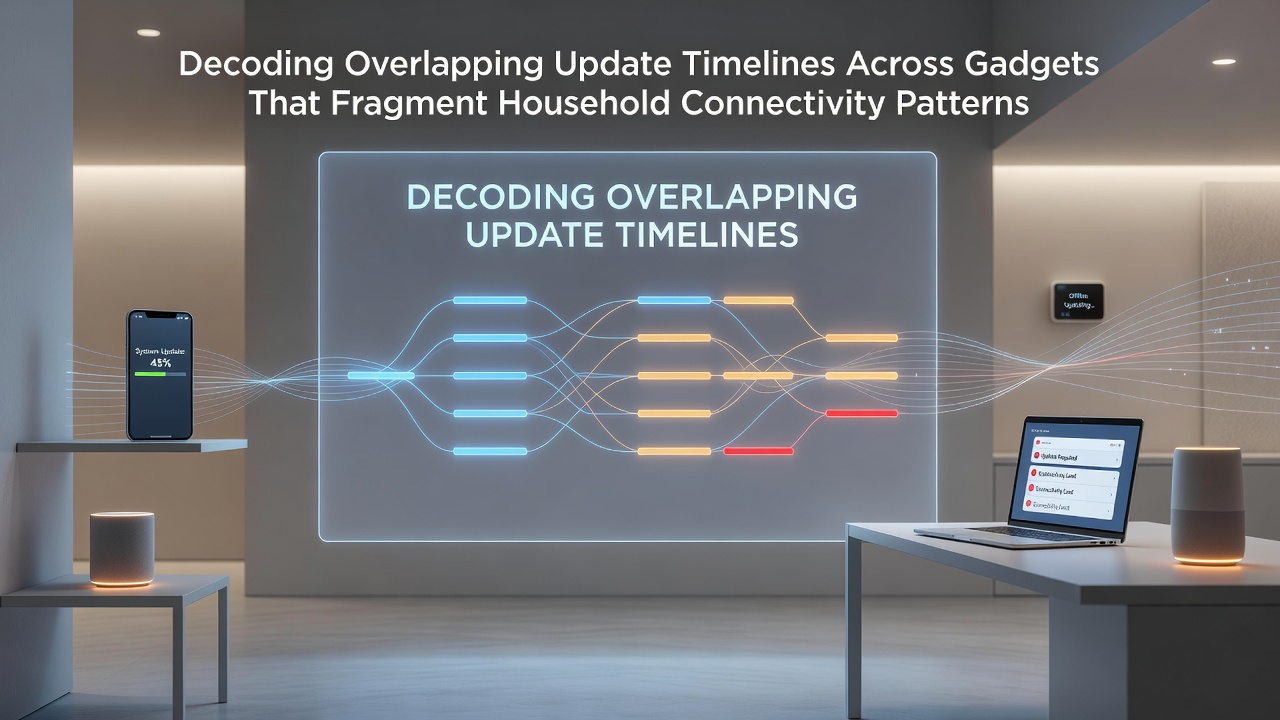
Decoding Overlapping Update Timelines Across Gadgets That Fragment Household Connectivity Patterns
Overlapping update timelines create measurable disruptions in household connectivity when smartphones, tablets, smart speakers, and routers schedule firmware and application patches without coordination. Data from network monitoring tools shows that staggered release cycles from different manufacturers produce simultaneous download spikes during evening hours, and this pattern intensified in reports compiled through August 2026.
Manufacturer Release Cycles and Their Synchronization Challenges
Device vendors publish update schedules based on security patches, feature additions, and hardware compatibility checks, yet these calendars rarely align across brands. Researchers at the University of Melbourne documented cases where Android phones and iOS tablets initiated large system files within minutes of each other on the same local network, forcing routers to queue traffic and delay other services. The resulting latency spikes appear most often between 8 p.m. and 10 p.m. local time when multiple users return home and power on devices.
Smart home hubs add another layer because they frequently pull firmware from separate cloud endpoints while connected appliances also request their own updates. Observers note that a single mesh Wi-Fi node can process four or five concurrent transfers when a voice assistant, two laptops, and a gaming console all receive notifications on the same evening, and packet loss increases as buffer queues fill.
Impact on Shared Household Bandwidth Allocation
Bandwidth allocation algorithms in consumer routers prioritize based on device type and traffic class, but overlapping updates bypass these rules when multiple high-volume transfers activate at once. Figures released by the Federal Communications Commission indicate that average household download volumes during peak update windows rose 27 percent between 2024 and 2026, driven largely by background processes rather than user-initiated streaming. This increase fragments available throughput for video calls and cloud backups that run in parallel.
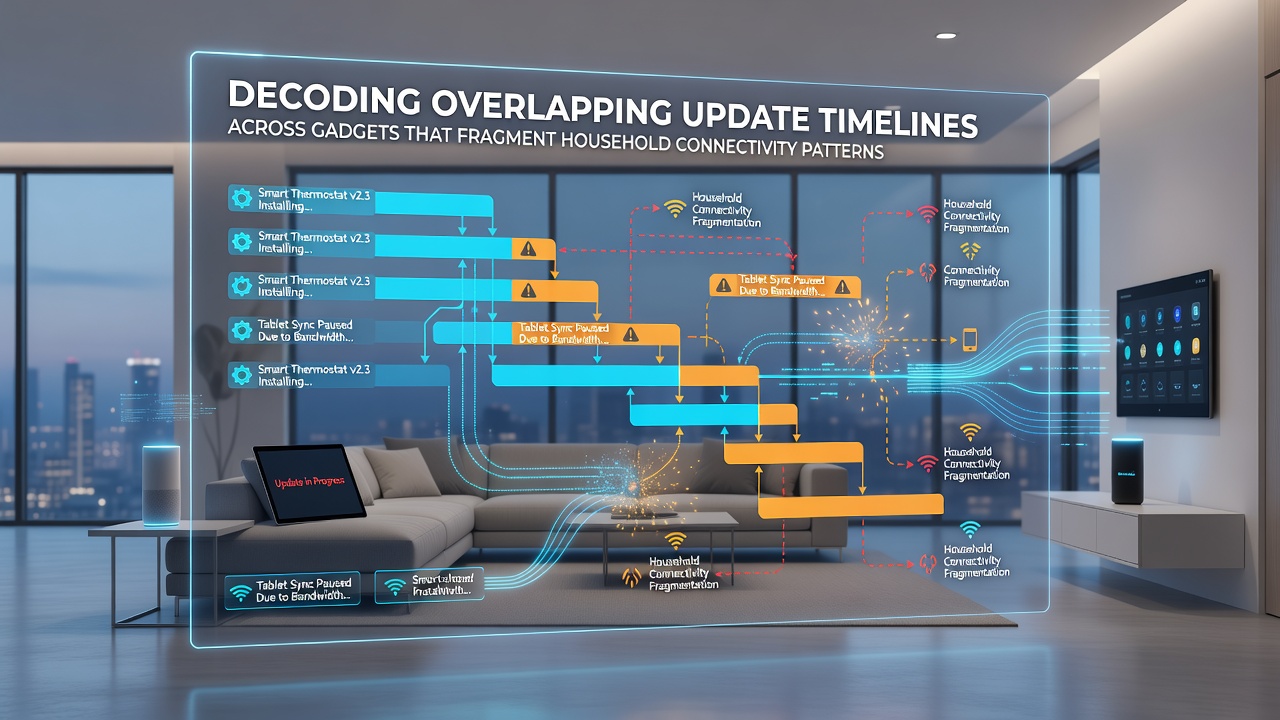
Studies from the European Telecommunications Standards Institute reveal that DNS resolution delays compound the problem when several devices request certificate validations simultaneously during firmware checks. The cumulative effect produces intermittent drops in smart lighting control and thermostat connectivity that persist until the largest update files complete.
Patterns Observed Across Multi-Device Ecosystems
Network logs collected from households with five or more connected gadgets demonstrate recurring clusters of activity. One common sequence begins with a smartphone finishing an operating system patch, immediately followed by a tablet requesting its own security update while a wireless speaker downloads new voice model files. Each transfer opens additional TCP sessions that the router must manage, and connection tables reach capacity faster than during normal browsing sessions.
Industry reports compiled by the IEEE Standards Association highlight that Bluetooth and Wi-Fi coexistence mechanisms also suffer when firmware updates for peripherals occur alongside main network upgrades. Audio streaming to multiple speakers experiences brief interruptions while the underlying radio stacks reinitialize, and these events cluster around manufacturer release dates published months in advance.
Monitoring Tools and Timeline Visualization Methods
Software utilities that aggregate device telemetry allow users to view overlapping timelines on a single calendar interface. These tools pull version numbers and scheduled update windows directly from each gadget's management API, then display potential conflicts before they occur. Data collected through such platforms in mid-2026 showed that households using centralized dashboards reduced simultaneous large transfers by scheduling manual pauses on non-critical devices.
Packet capture analysis further confirms that staggered update windows lower overall retransmission rates, and this improvement appears consistent across cable, fiber, and fixed wireless connections. Researchers continue to track how seasonal changes in daylight saving time affect these patterns because devices in different time zones sometimes shift their check-in schedules unexpectedly.
Conclusion
Decoding overlapping update timelines requires systematic collection of device schedules and network traffic data. Organizations including the FCC and ETSI continue to publish guidance on router configuration settings that mitigate congestion during these events, while academic studies supply quantitative evidence of the connectivity fragmentation that results when timelines collide. Households that map their gadget update patterns gain clearer visibility into recurring disruptions and can apply targeted scheduling adjustments to maintain stable connections across the entire ecosystem.